The Archive catalogues each textile as an object — a flat specimen, photographed against a wall. But in East Sumba a cloth is defined less by what it is than by what it does. The same hinggi is a man's daily mantle, a banner flown over a dragged tombstone, a shroud that wraps the dead, a gift that binds two clans in marriage, and a currency carried inland to barter for rice. Its meaning lives in these uses, not in the weave alone.
This section reads the textiles through the historical photographs that show them in life. Each function below pairs archival images with an account of the role the cloth played in Sumbanese society. It is the archive's living counterpart to the object record.
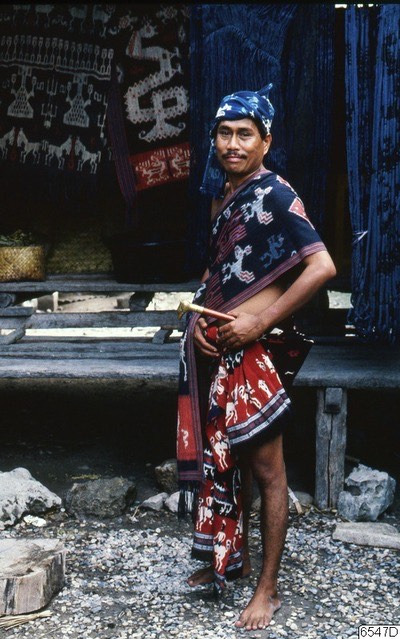
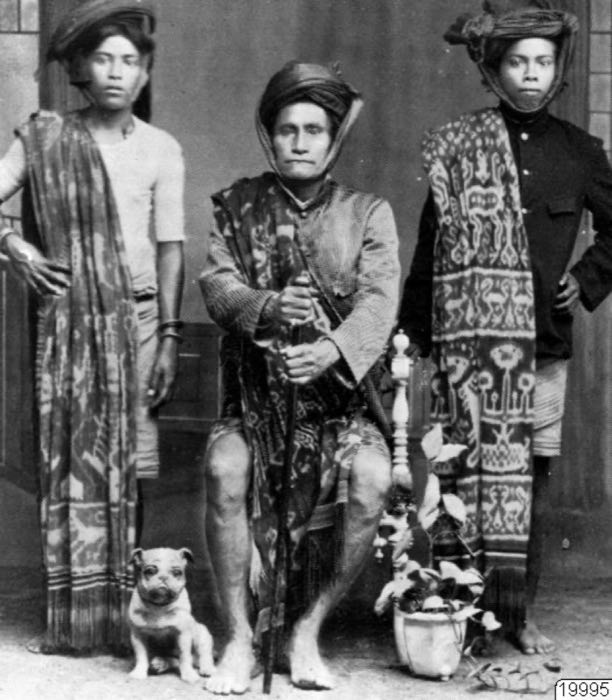
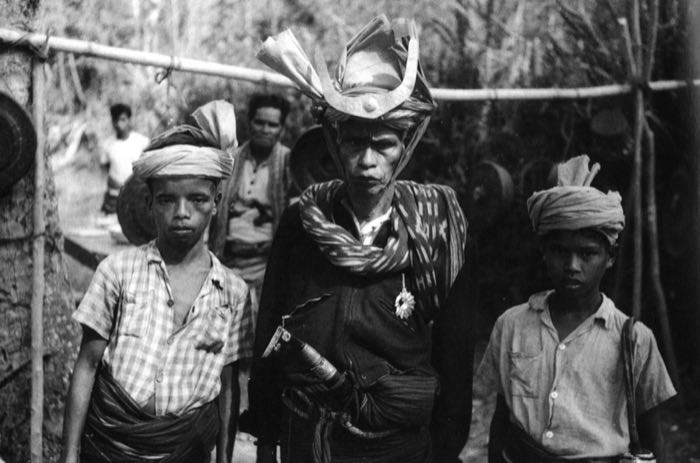
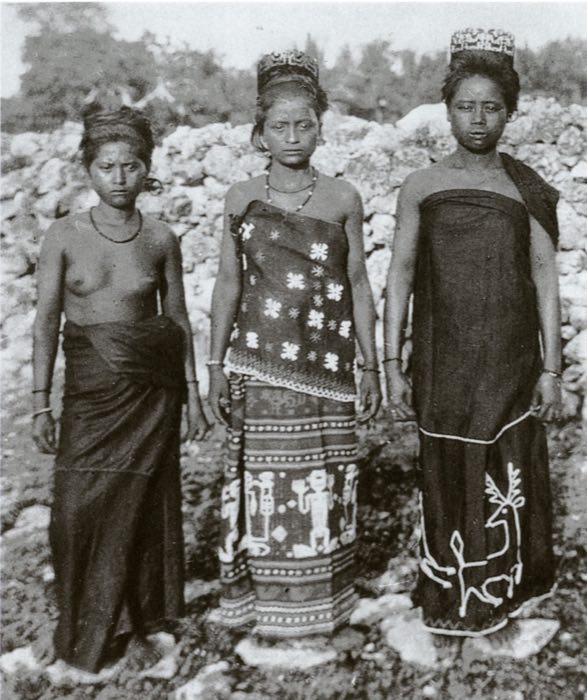
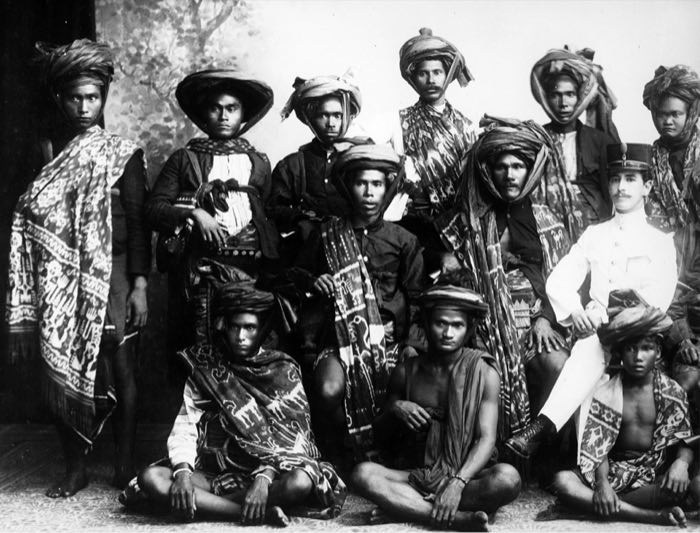
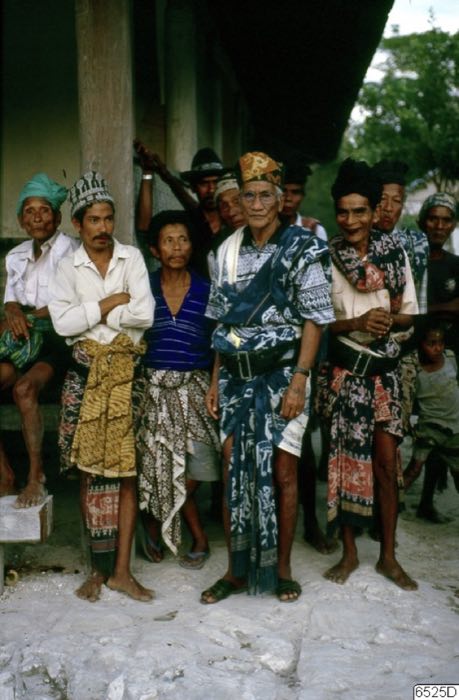
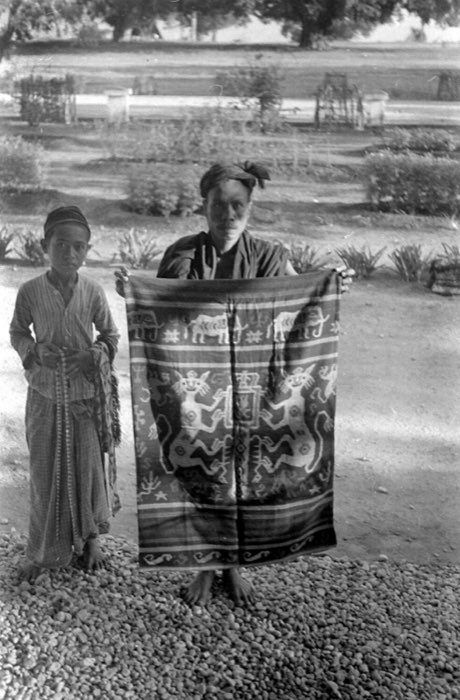
The man's hinggi is worn as a pair — one cloth folded around the waist and hips, a second draped over one shoulder or held across the body. The woman's lau is a sewn tube skirt. Cloth was the principal form of dress, and among the nobility (maramba) it was also a statement of rank: the finest red kombu ikat, and the right to wear particular motifs, belonged to high-ranking families. To appear in full hinggi, as the men in this portrait do, was to display standing.
Dress was not fixed at a single moment. The same cloth that clothed a man in life would later wrap him in death, and the quality of textile a person could wear tracked their place in a graded social order. Reading the worn photograph tells you what the flat object cannot: who could wear this, and on what occasion.
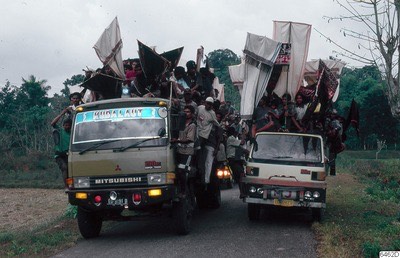
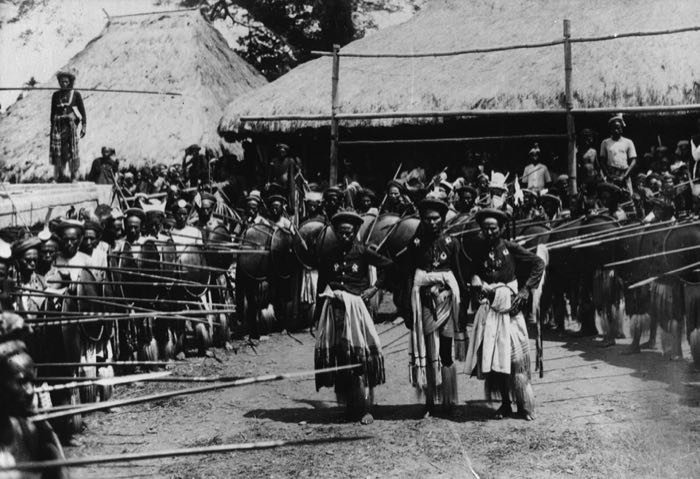
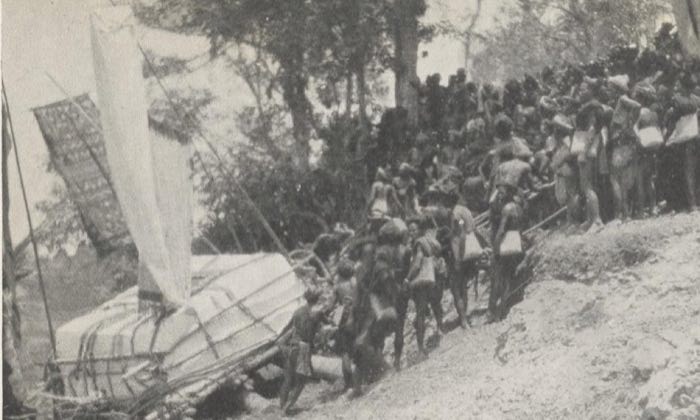
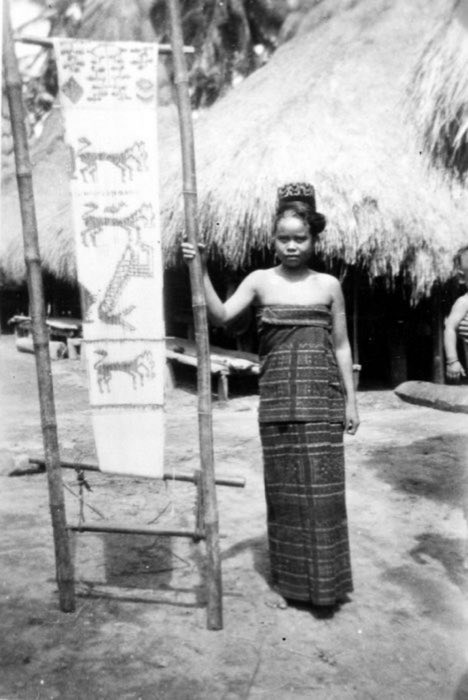
Building a megalithic tomb in Sumba required dragging an immense stone from the quarry to the village — the tarik batu, a feast that mobilised whole clans and could take days. In these hauls, and in other large ceremonies, textiles left the body and went up on poles: raised vertically beside the sledge as banners, they were visible for a distance across the fields.
The banner did work that dress could not. It announced whose feast this was, marked the scale of the undertaking, and honoured the ancestor for whom the tomb was being raised. Here the cloth is not clothing but signal — the same object performing a public, collective, ceremonial role. It is the clearest case of why an object record alone underdescribes a Sumbanese textile: nothing on the flat specimen tells you it once flew over a moving stone.
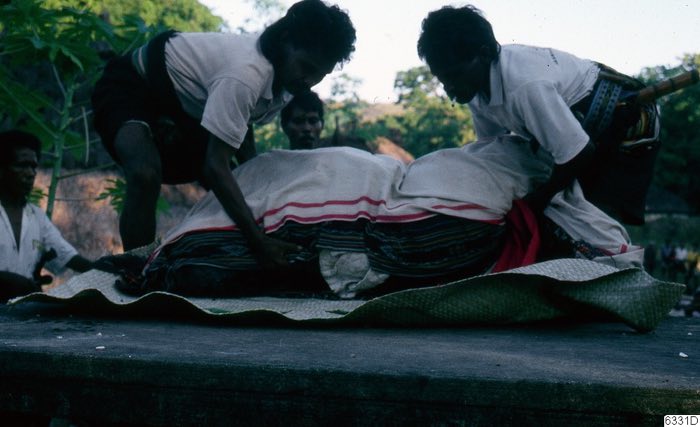
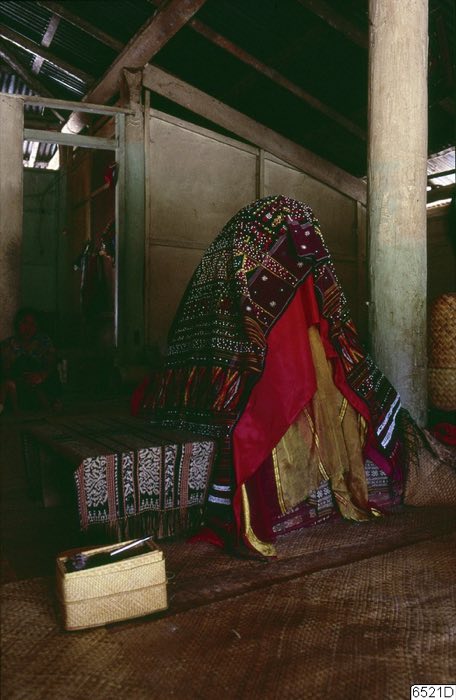
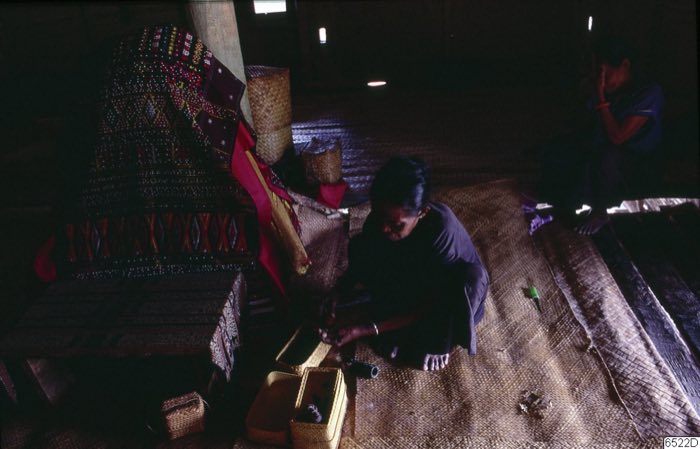
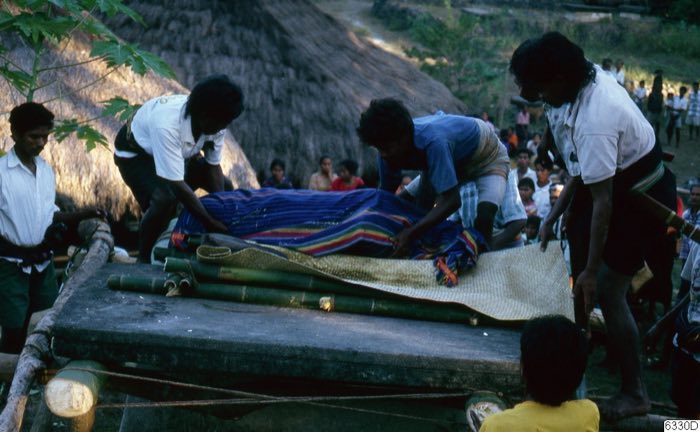
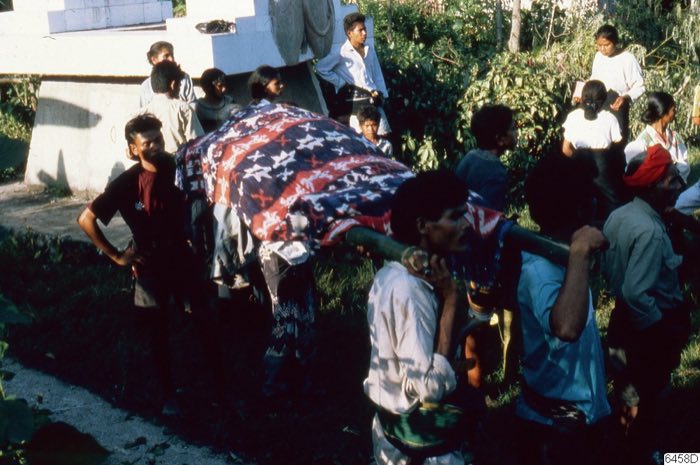
At death the body is dressed and bound in ikat, and further textiles are heaped into the grave or draped over the tomb. Cloth accompanies the dead on the journey to the ancestral village of the marapu. The number and quality of textiles a family could commit to a burial was, again, a measure of standing — and a reason so many of the finest cloths left the living world entirely.
Photographs forthcoming — mortuary images to be added from the archival survey.
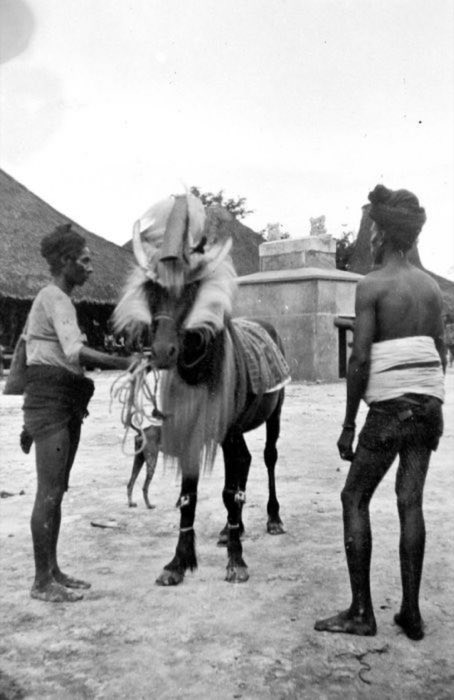
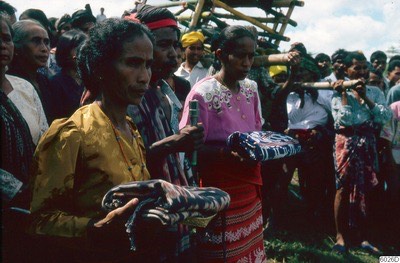
Sumbanese marriage joins two houses through a graded exchange: the wife-takers (anakawini) give "male" valuables — livestock, horses, gold mamuli — and the wife-givers (yera) return "female" valuables, chief among them woven textiles. Cloth is thus not only worn and displayed but circulated: it moves between clans as the material of alliance, and a single prestigious textile can carry the memory of the marriages it helped make.
Photographs forthcoming — exchange and ceremonial-gift images to be added.
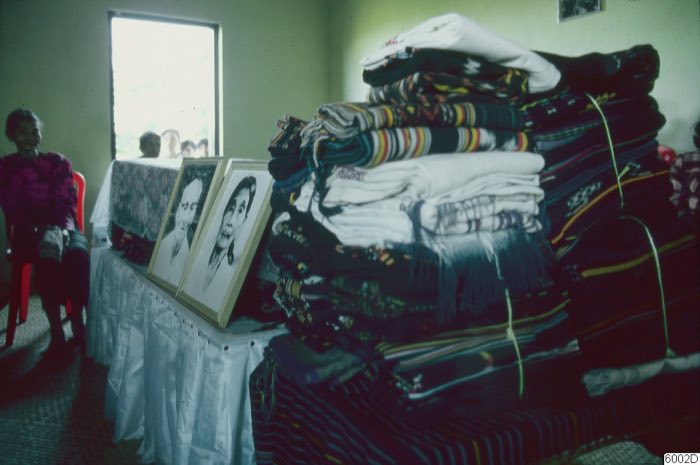
On ceremonial occasions textiles are hung within and before the clan house (uma), lining the space in which rites are performed. Displayed cloth frames the ritual, marks the house's wealth and history, and turns the domestic structure into a ceremonial one for the duration of the event.
Photographs forthcoming — ritual-house images to be added.
East Sumba's land is unevenly watered. The coastal domains — Kambera, Kanatang, and the eastern littoral — are dry, their harvests thin in a bad year. Inland and higher, Lewa catches more rain and grows rice in relative abundance. That ecological asymmetry made the two zones dependent on each other, and cloth was the instrument that balanced them.
When coastal food stocks ran tight — through the long dry season, or in drought — coastal communities carried their principal manufactured wealth, woven textiles, up into Lewa and bartered cloth for rice. The exchange ran the other way for the staple: rice came down to the coast, textiles went up to the interior.
What made cloth the medium was that Lewa did not make its own. Weaving was prohibited in Lewa, so textiles could not be produced there; they had to be obtained through trade. Coastal weaving, in effect, clothed a region that was forbidden to weave, and in return the coast was fed. Here the hinggi is neither dress nor gift nor banner but currency — a store of value dense enough to move inland and exchange for the one thing the coast could not reliably grow.
Photographs forthcoming — trade and market images to be added.